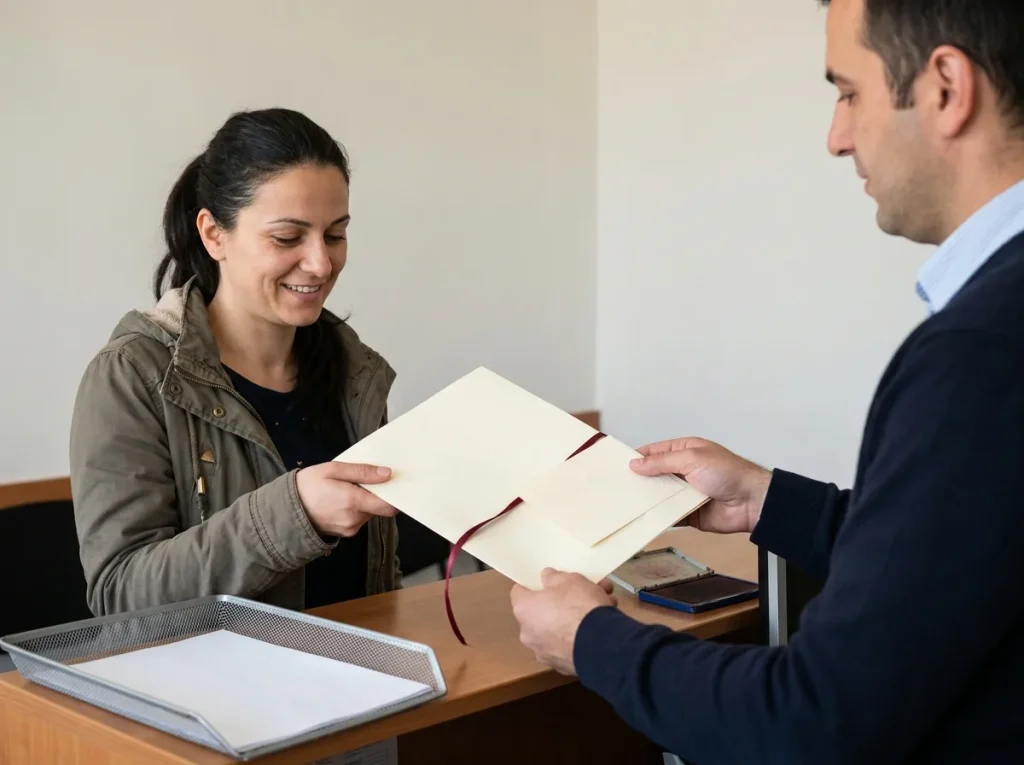
An apostille for a North Macedonian document can only be issued in North Macedonia—by the Basic Courts (Osnovni sudovi) where the document was issued, or by the Ministry of Justice for notarized documents and criminal record certificates. Once you obtain the apostille on the original document before traveling, we handle its sworn Turkish translation and notarization in Türkiye. Documents without an apostille require a chain of consular legalization.
What is an apostille between Türkiye and North Macedonia?
An apostille is an official certificate issued under the 1961 Hague Apostille Convention. It confirms the authenticity of the signature and seal on a public document so it can be used in another member state without consular legalization. Türkiye has been a party to the Convention since 1985, and North Macedonia has been a party by succession since 1991. This shared framework simplifies cross-border document use between the two countries.
Who issues an apostille in North Macedonia?
In North Macedonia, apostilles are issued by two different authorities depending on the document type. For general public documents, the apostille is issued by the Basic Courts (Osnovni sudovi) where the document was issued. For notarized documents and criminal record certificates, the competent authority is the Ministry of Justice.
Who issues an apostille on documents in Türkiye?
In Türkiye, apostilles on administrative documents are issued by provincial governorates (valilik) and district governorates (kaymakamlık). When you obtain a properly executed apostille from these offices, the document is ready for international presentation under the Hague Convention. According to the Turkish Ministry of Foreign Affairs, a properly apostilled Turkish document needs no further certification from the Ministry of Foreign Affairs before being taken to North Macedonia.
Does the 1997 Legal Assistance Agreement replace the apostille?
The Agreement on Legal Assistance in Civil and Criminal Matters between Türkiye and Macedonia was signed in 1997 and entered into force in 2000. Although Article 14 states that officially sealed documents need no further procedure, institutions in Türkiye still require an apostille or consular legalization in practice. Without an apostille, a document must go through consular legalization, sworn translation, notarization, and Ministry of Foreign Affairs legalization. To avoid this chain, we recommend getting an apostille in North Macedonia before traveling.
Do multilingual civil status extracts need an apostille?
Multilingual civil status extracts for birth, marriage, and death issued under the International Commission on Civil Status (CIEC) conventions contain a standard Turkish formula. Because of this built-in Turkish text, these multilingual extracts are accepted in Türkiye without additional certification or translation. In contrast, standard single-language civil status extracts issued in North Macedonia typically go through an apostille and a notarized Turkish translation, depending on the receiving institution's current practice.
How are Turkish documents prepared for North Macedonia?
For documents moving from Türkiye to North Macedonia, the typical chain is a sworn translation into Macedonian, notarization, and an apostille placed on the notarized document by a governorate or district governorate. Because acceptance criteria depend on the receiving institution in North Macedonia, we confirm that institution's requirement with our client before starting the translation and legalization steps.
How do Macedonian translation and certification work?
Check the Apostille
Ensure the original Macedonian document bears an apostille from the Basic Court or Ministry of Justice.
Sworn Turkish Translation
A sworn translator translates both the main Macedonian document and the attached apostille certificate.
Notary Public Certification
The translation is notarized at the Turkish notary office where the translator's oath record is kept.
Submit to Institution
Present the original apostilled document together with the notarized translation to the Turkish authority.
Frequently Asked Questions
Should the apostille be placed on the original or the translation?
For documents coming from North Macedonia, the apostille is placed directly on the original in North Macedonia. For documents going from Türkiye to North Macedonia, the typical process is sworn translation, notarization, and an apostille on the notarized document from a district governorate or governorate—we handle this entire process.
Can a North Macedonian document receive an apostille in Türkiye?
No, an apostille can only be issued by the competent authorities of the country where the document originated. A public document issued in North Macedonia must receive its apostille from the Basic Courts or the Ministry of Justice in North Macedonia.
How are electronic or barcoded documents handled for an apostille?
Apostille procedures and acceptance rules in the destination country for barcoded or electronically signed documents depend on the issuing authority and the receiving institution. We clarify the requirements of the institution where you will submit your document with you before we begin.
Does an apostilled Macedonian document still need translation in Türkiye?
Yes, an apostille only confirms the authenticity of the signature and seal on the document; it does not replace language requirements. Unless it is a multilingual CIEC extract, Turkish institutions require a notarized translation into Turkish prepared by a sworn translator.
What is the difference between a sworn translation, notarization, and an apostille?
A sworn translation is a translation signed and stamped by a translator whose oath record is held at a notary. Notarization is the official certification of the translator's signature by that notary. An apostille is a certificate that makes the document valid in signatory countries; it is issued by the governorship (valilik) or district governorship (kaymakamlık) in Türkiye, and by the Basic Courts or the Ministry of Justice in North Macedonia. At the beginning of the process, we confirm which certifications the receiving institution requires.