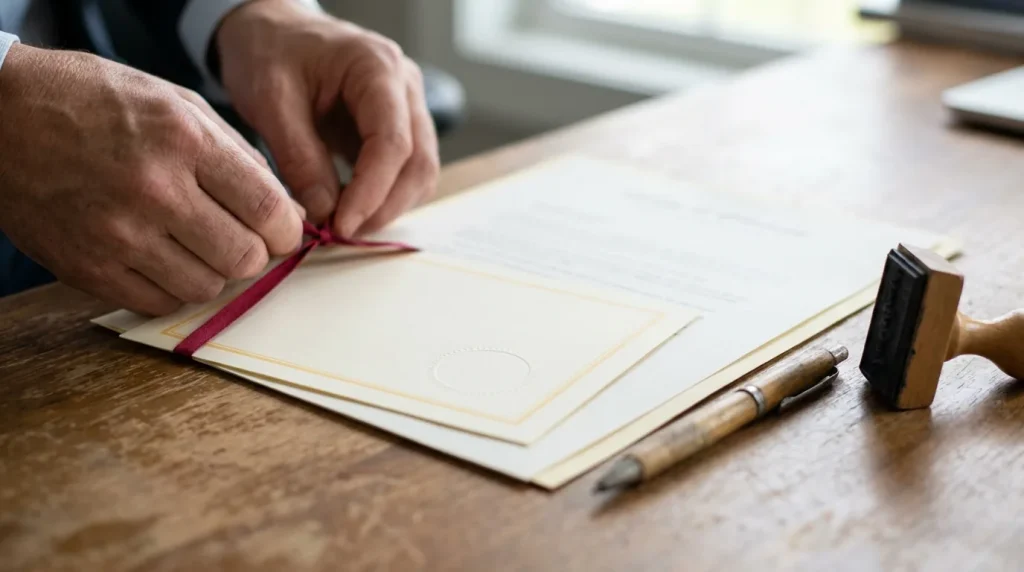
To grasp the general meaning of a short message or web page, an online Macedonian translation tool or dictionary does the job. Live meetings and notary procedures involving a party who does not speak Turkish require an interpreter. For documents submitted to public authorities, institutions require a translation signed by a sworn translator and usually notarization; we complete this entire process from start to finish.
Which method fits which need when translating between Macedonian and Turkish?
Needs fall into three groups. In the first, the goal is simply to understand: to find out what an email from North Macedonia, a product label, or an official letter is about, online tools and dictionaries give the general sense. The second is two-way conversation: a business meeting, a phone call, or a transaction before a notary involving someone who does not speak Turkish requires a live interpreter. The third is official use: when you submit a birth certificate, diploma, power of attorney, or court judgment to an authority, sworn translation, notarization, and apostille steps are required.
The rule of thumb for choosing the right method is simple: if you are the only person who will read the text, digital tools can give you a first look. If the translation will go into an official file, be submitted with an application, or involve a meeting with legal consequences between two parties, that is where we step in. We review your document and confirm with you in advance the exact chain of certification required by the receiving institution.
What can and cannot be done with Macedonian texts in Google Translate?
Google Translate helps you grasp the general meaning when turning Macedonian texts into Turkish or Turkish sentences into Macedonian. By pasting a copyable email, a news article, or the headings on an application form into the box, you can quickly see what a document is about. Before you move on to an official procedure, it serves as a practical preview tool for identifying which type of document you are holding or writing an everyday message to the other party.
Automated tools cannot be used for official documents. Personal and place names written in the thirty-one-letter Cyrillic alphabet must match the Latin spelling in the passport letter for letter, and legal and administrative terms must be translated with their exact equivalents. In addition, public authorities require the sworn translator's signature and stamp, and usually the certification clause of the notary holding that translator's oath record; we prepare these documents with our sworn translators.
What should you watch out for when using a Macedonian–Turkish dictionary?
A Macedonian–Turkish dictionary is useful for looking up single words, but word-for-word translation in official records is misleading. Document titles, names of courts and ministries, marital status entries, and degree titles take their meaning from context. A word listed with its everyday sense in a dictionary may correspond to an established legal term on a civil registry record or a trade registry extract, and a standalone word lookup does not show that distinction.
When we translate a file, we keep terminology consistent across every document in it. We fix first and last names to match the primary Latin spelling on the passport or ID card, and we render institution and court names with the same equivalent throughout the file. That way, when a civil registry extract, a birth certificate, and a power of attorney are submitted together, no discrepancy arises during the authority's review.
How is Macedonian written in Latin letters and phonetic spelling?
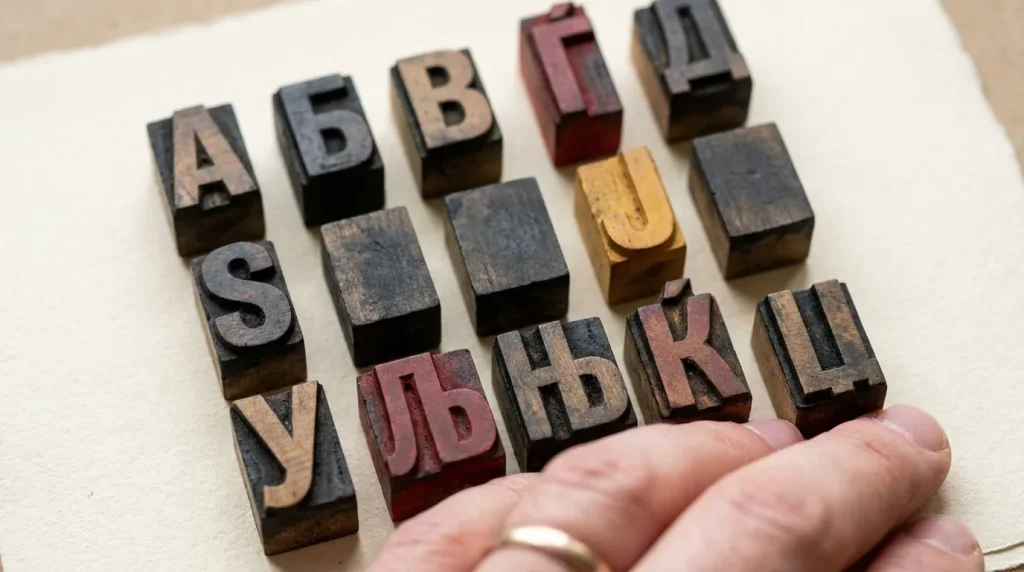
Macedonian, the official language of North Macedonia, is written in a thirty-one-letter Cyrillic alphabet. Readers unfamiliar with Cyrillic letters often look for a phonetic Macedonian translation or a Latin-script spelling so they can pronounce a word or read personal names. Converting the letters into the Latin alphabet, known as transliteration, helps you sound out the text and spot proper nouns, but it does not give the Turkish meaning of the words; a pronunciation chart therefore does not replace a translation.
North Macedonia passports and ID cards display personal data both in the Macedonian Cyrillic alphabet and in basic Latin characters according to the ICAO Doc 9303 standard. In official translation, the Latin spelling on the passport is authoritative; we standardize personal names according to the passport spelling so that no letter discrepancies arise across your documents. If you want to examine the sound equivalents of each letter individually, you can view the complete table in our Macedonian alphabet guide.
When do Macedonian voice translation apps fall short?
Macedonian voice translation features on phones make everyday tasks easier, such as asking for directions, shopping, or getting the gist of a short daily message. However, in a statement with legal consequences, a medical examination, or a commercial negotiation, a device mishearing a sentence or rendering a term out of context can cause a serious loss of rights. In meetings that require mutual confirmation, you should work with an interpreter who knows the subject matter rather than relying on automatic speech recognition tools.
Under Turkish Notary Law (Law No. 1512), Article 74, if a party to a transaction does not speak Turkish, a sworn interpreter must be present during the notary procedure. We assign sworn Macedonian interpreters for notary transactions such as powers of attorney, letters of consent, and sales, as well as for civil marriage ceremonies, hospital consultations, and business meetings; before your application, we also confirm with you what documentation the relevant institution requires for the interpreter.
How does Macedonian-to-Turkish and Turkish-to-Macedonian translation work for official documents?
For a document issued in North Macedonia to be used in Türkiye, it generally must carry an apostille obtained either from the Basic Courts where the document was issued, or from the Ministry of Justice for notarized documents and criminal record certificates. Our sworn translators complete the Macedonian-to-Turkish translation of the apostilled document, and we obtain the notarization. If the document was brought from North Macedonia without an apostille, we plan the sequence of consular attestation, sworn translation, notarization, and Ministry of Foreign Affairs attestation together with you.
For documents going from Türkiye to North Macedonia, after we complete the Turkish-to-Macedonian translation, we obtain notarization and then an apostille on the notarized document from the district governorship or provincial governorship. Because the acceptance of a translation done in Türkiye by institutions in North Macedonia depends on the practice of the receiving authority, we confirm the requirement of the office where you will submit the document with you before starting. We deliver the completed documents via courier delivery, e-signed PDF, or in-person pickup at our office.
How do you start the Macedonian translation process with us?
Send us your document
Send a clear photo or scan of your document via our online form, email, or WhatsApp; if you prefer, you can also send it by courier or drop it off at our office.
Review and planning
We review the document type, name spellings as shown on your passport, current apostille status, and the certification steps required by the receiving institution to map out the exact process.
Sworn translation and notarization
Our sworn translator completes, signs, and stamps the translation; if notarization is required, we obtain the certification at the notary public that holds our translator's oath record.
Document delivery
We deliver the completed official translation according to your preference: via courier delivery, as an e-signed PDF, or through in-person pickup at our office.
Frequently Asked Questions
Is a Macedonian translation done with Google Translate valid for official procedures?
No, printouts from online tools are not accepted by official institutions. Official validity requires a sworn translation bearing the signature and stamp of a translator who holds an oath record before a notary public, along with notarization in most cases. Our Macedonian sworn translators translate your documents, and we complete the notarization and apostille steps to deliver them ready for official use.
Who can officially translate a Turkish document into Macedonian?
Our sworn translators holding a notary oath record translate Turkish documents into Macedonian for submission to official authorities. For documents going to authorities in North Macedonia, the sworn translation is followed by notarization and an apostille certificate from a district governorship or provincial governorship. Before starting, we clarify the approval requirements of the receiving institution together with you.
How is a Macedonian name or word written in Latin letters?
Each sound in the 31-letter Macedonian Cyrillic alphabet is transcribed into the Latin alphabet by following standard letter equivalents, while official documents follow the ICAO Doc 9303 Latin-letter spelling shown in the North Macedonia passport. You can review the letter correspondences in our Macedonian alphabet guide; in official translations, we write given names and surnames exactly as they appear in the passport.
Is using a Macedonian-Turkish dictionary enough for official document translation?
No, dictionaries only give the meaning of individual words and do not provide consistent legal terminology, a sworn translator's stamp, or notarization. Because official authorities do not accept self-translations, our sworn translators translate your Macedonian documents and prepare them signed and stamped for official procedures.
When is an interpreter needed instead of a voice translation app?
Under the Turkish Notary Law (Law No. 1512), Article 74, having a sworn interpreter present is a legal requirement for notary transactions such as powers of attorney when a participant does not speak Turkish. For meetings, hospital visits, and negotiations that carry legal, medical, or commercial consequences, working with an interpreter is the reliable choice. Voice translation apps only convey the general meaning; we assign sworn Macedonian interpreters for your official transactions and meetings.
How can I get a sworn Macedonian translation without visiting the office?
You can start the process remotely by sending a photo or scan of your document to us via our online form, email, or WhatsApp. Once we complete the sworn translation, notarization, and apostille steps, we deliver your documents by courier, as an e-signed PDF, or via in-person pickup at our office; notarized and apostilled translations can also be delivered as an e-signed PDF.